
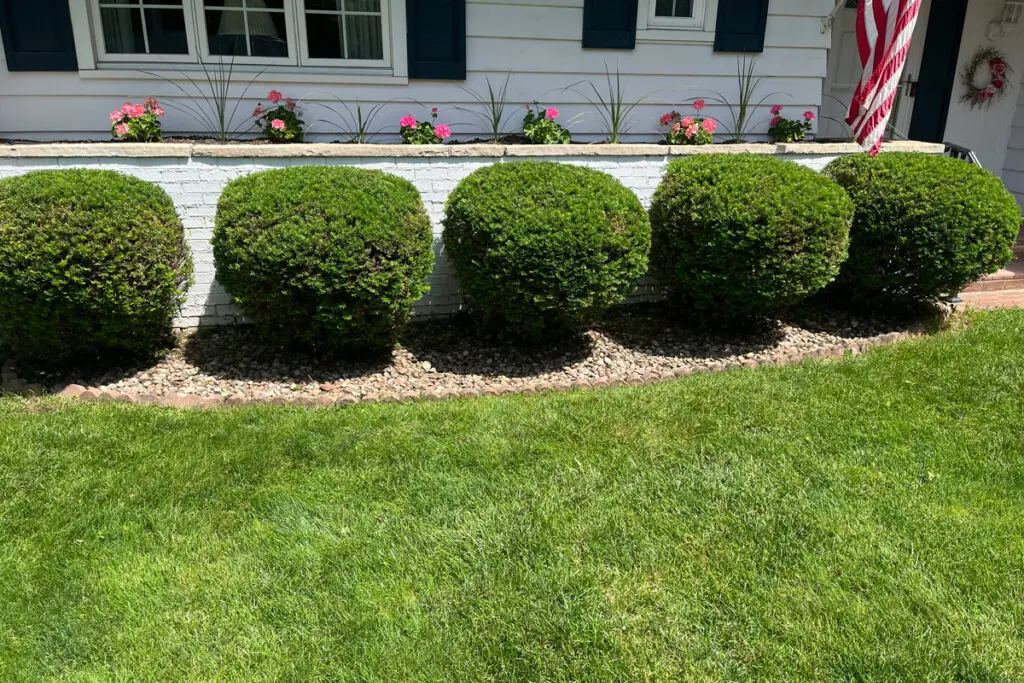
Trimming bushes seems simple until you cut back a lilac at the wrong time and wonder why it didn’t flower, or give your shrubs a late-season haircut only to find damaged tips the following spring.
In Appleton and Northeast Wisconsin, when you trim can be just as important as how you trim.
Fortunately, you don’t need to memorize a complicated pruning calendar. Most common shrubs fall into a few basic groups.
Spring-Blooming Shrubs: Trim After They Flower
Shrubs that bloom in spring typically produce flowers on growth from the previous year.
That means trimming them too early can remove the buds that were about to become this year’s flowers.
Common examples include:
- Lilacs
- Forsythia
- Viburnum
- Weigela
- Mock orange
- Bridal wreath spirea
For these shrubs, wait until flowering has finished and then do your trimming. That gives the plant plenty of time to grow and develop buds for the following year.
Summer-Blooming Shrubs: Trim in Early Spring
Many shrubs that bloom later in the summer produce flowers on new growth.
These can generally be pruned in late winter or early spring before new growth really gets moving.
Examples include:
- Potentilla
- Panicle hydrangea
- Rose of Sharon
- Shrub roses
- Summer-blooming spirea
- Red-twig dogwood
Early-season pruning removes old growth and gives the plant the growing season to fill back in.
What About Yews, Boxwoods and Shaped Shrubs?
Shrubs maintained in a formal shape are a little different.
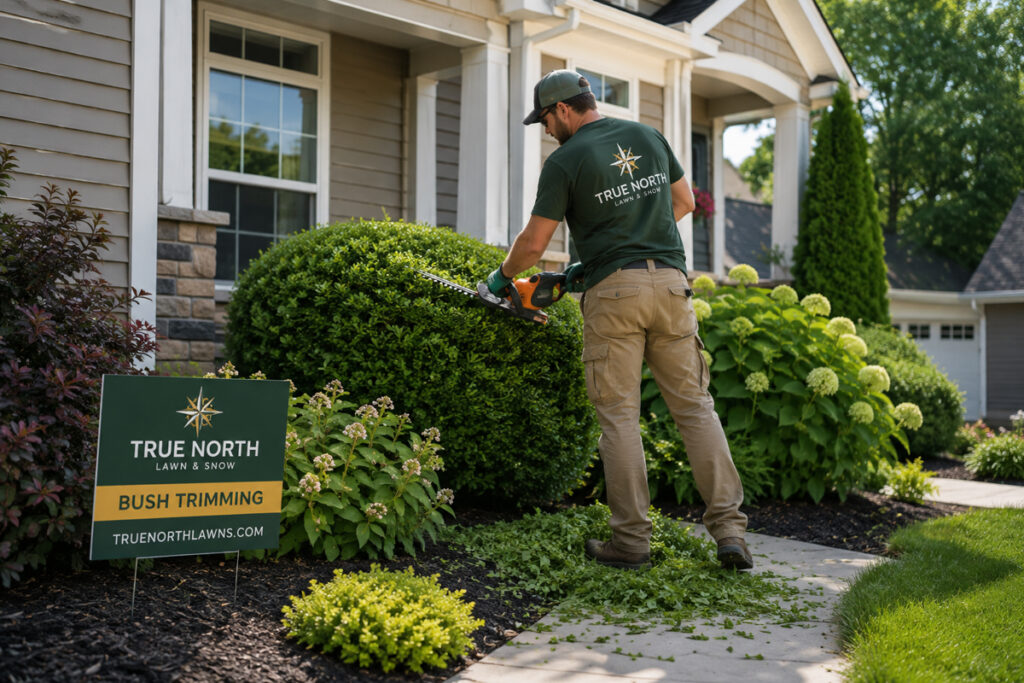
Yews, boxwoods, arborvitae and similar foundation shrubs are often sheared to maintain their appearance rather than selectively pruned for flowering.
For most Appleton properties, two light shearings during the growing season are plenty.
A first trimming around mid-to-late June cleans up the spring growth and restores the shape. A second light trimming around late July or early August can keep things looking clean through the rest of the season.
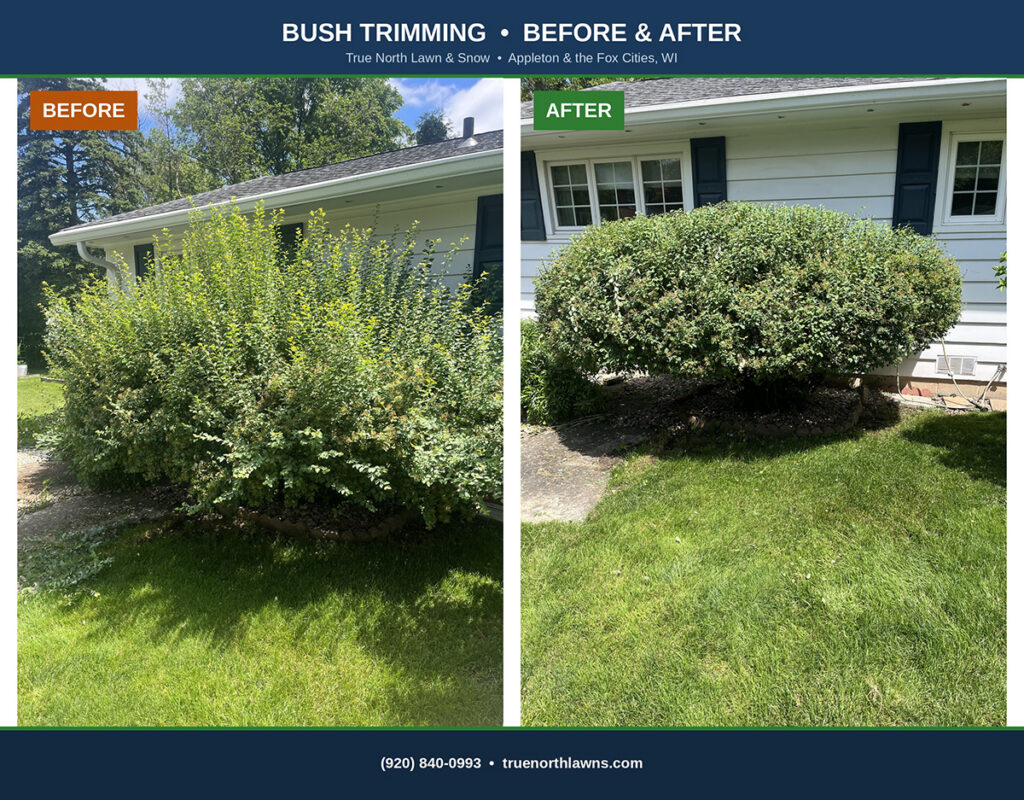
The goal isn’t to constantly cut them back. It’s to maintain the shape without repeatedly stressing the plant.
Be Careful With Late-Summer and Fall Trimming
This is probably the most important timing mistake to avoid in Wisconsin.
Heavy pruning late in the growing season can encourage tender new growth just as the plant should be preparing for winter. That new growth may not have enough time to harden before freezing weather arrives.
That’s why we generally avoid significant trimming from late summer into fall.
It can be tempting during fall cleanup to grab the hedge trimmer and clean everything up before winter, but sometimes leaving a shrub alone is the better choice.
Dead, damaged or hazardous branches are a different situation, but routine shaping can usually wait.
What If You Don’t Know What Kind of Shrub You Have?
That’s extremely common.
If you inherited the landscaping with your house, you probably weren’t handed an instruction manual explaining what’s planted around it.
Before doing major pruning, identify the shrub and determine whether it blooms on old growth or new growth. That one piece of information usually tells you when it should be trimmed.
When in doubt, waiting is generally better than making a heavy cut at the wrong time.
When Should Overgrown Bushes Be Cut Back?
There’s a difference between trimming a shrub and trying to rescue one that’s been neglected for years.
If foundation shrubs have grown over windows, into walkways or far beyond their intended size, simply shearing the outside into a smaller ball may not solve the problem.
Older, overgrown shrubs sometimes need selective or rejuvenation pruning to remove larger branches and encourage healthier new growth.
That’s also where knowing the plant matters. Some shrubs tolerate aggressive rejuvenation extremely well, while others don’t.
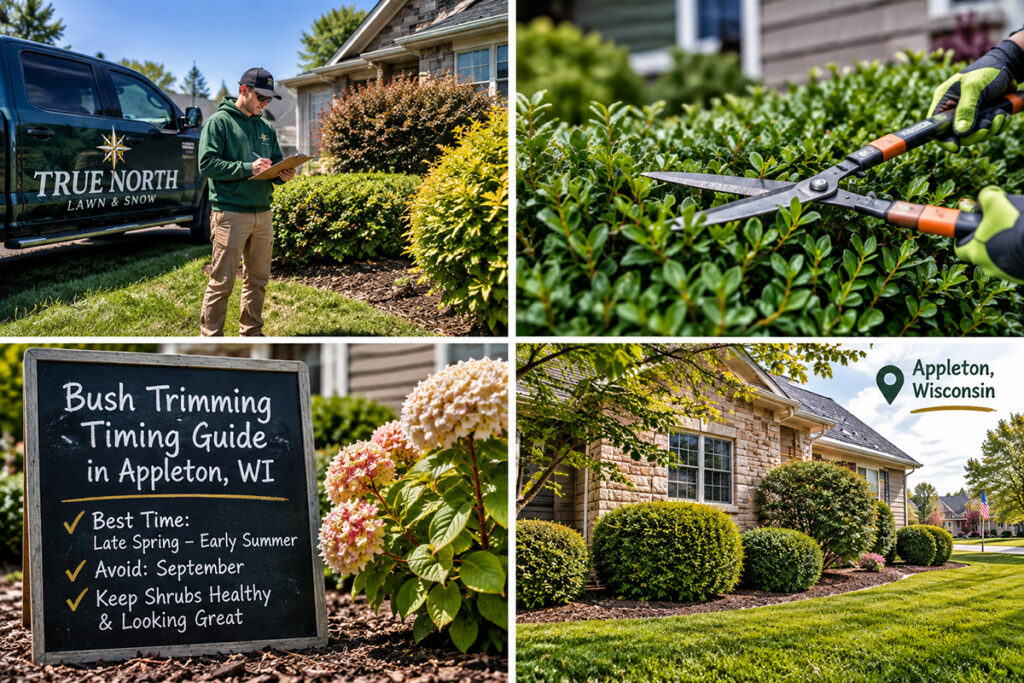
When It Makes Sense to Hire Someone
Light trimming is absolutely something many homeowners can handle themselves.
Professional help starts making more sense when:
- Several different shrub varieties need different timing
- Foundation shrubs have become badly overgrown
- You want consistently shaped hedges or foundation plantings
- There’s enough trimming that cleanup becomes half the job
At True North Lawn & Snow, bush trimming can be handled alongside your regular lawn and seasonal property maintenance.
Because we’re already watching the property throughout the growing season, we can also tackle trimming when the shrubs actually need it instead of simply picking an arbitrary day on the calendar.
Keep Your Shrubs Healthy and Looking Their Best
Good bush trimming isn’t about cutting everything back whenever it starts looking shaggy.
It’s about knowing what you’re trimming, why you’re trimming it, and when the plant can best handle it.
Get those three things right and you’ll have healthier shrubs, better flowering and cleaner landscaping throughout the season.
If you’d rather leave the timing and trimming to us, request a free estimate and we’ll take a look at what you’ve got.